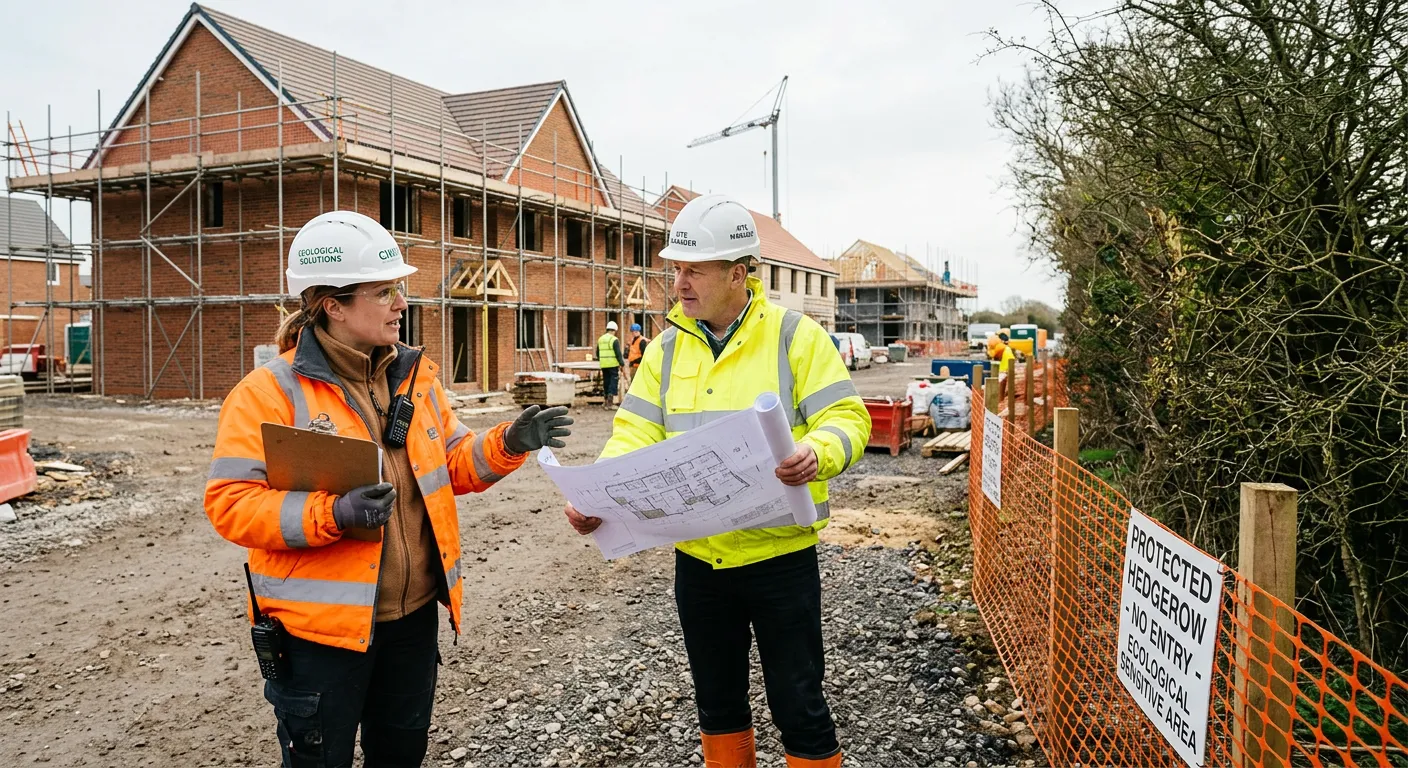
Ecological Clerk of Works (ECoW)
On-site ecological supervision to ensure compliance and protect wildlife during construction.
What This Service Involves
An Ecological Clerk of Works (ECoW) is a qualified ecologist whose role is to act as your on-site "ecology supervisor" across the construction or land-use change phases of a project. They ensure that ecological protection measures, planning/consent obligations and wildlife legislation are properly implemented on-site.
Why You Might Need an ECoW
- Planning requirement: Many planning permissions or consents require an ECoW as a condition.
- Risk reduction: Where protected species or sensitive habitats are involved, having an ECoW reduces the risk of habitat damage, licence breaches, unexpected delays or enforcement action.
- On-the-ground assurance: It gives you on-the-ground ecological assurance during construction, allowing the main works to progress smoothly while ecological risks are managed proactively.
- Compliance support: It supports compliance for clients, contractors and regulators, demonstrating due diligence, which helps with stakeholder confidence and audit/condition discharge.
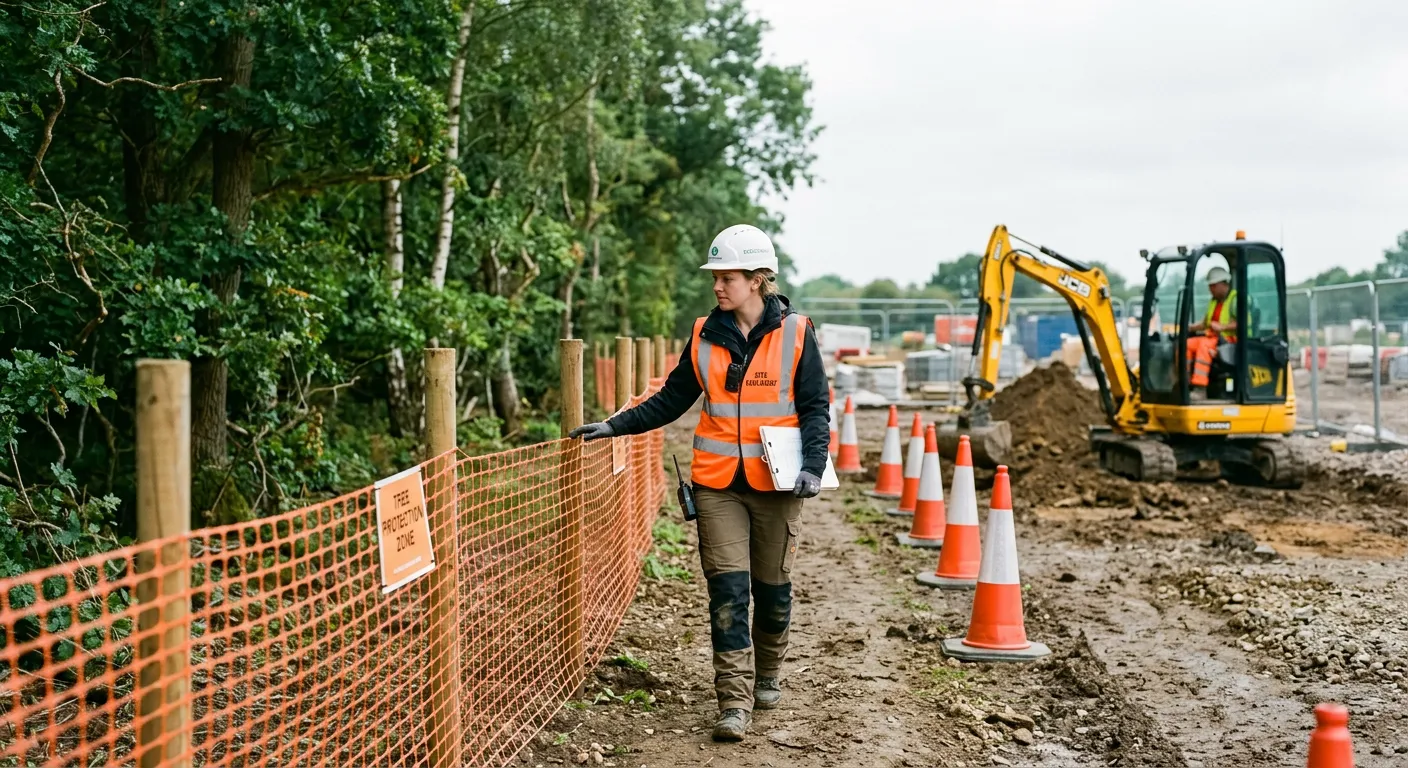
What Our ECoW Service Includes
Our ECoW service is tailored to your site and project scale but typically includes:
Pre-Construction Checks
Review of ecological constraints, protected species licences/conditions, habitat management/mitigation method statements.
Site Inductions and Toolbox Talks
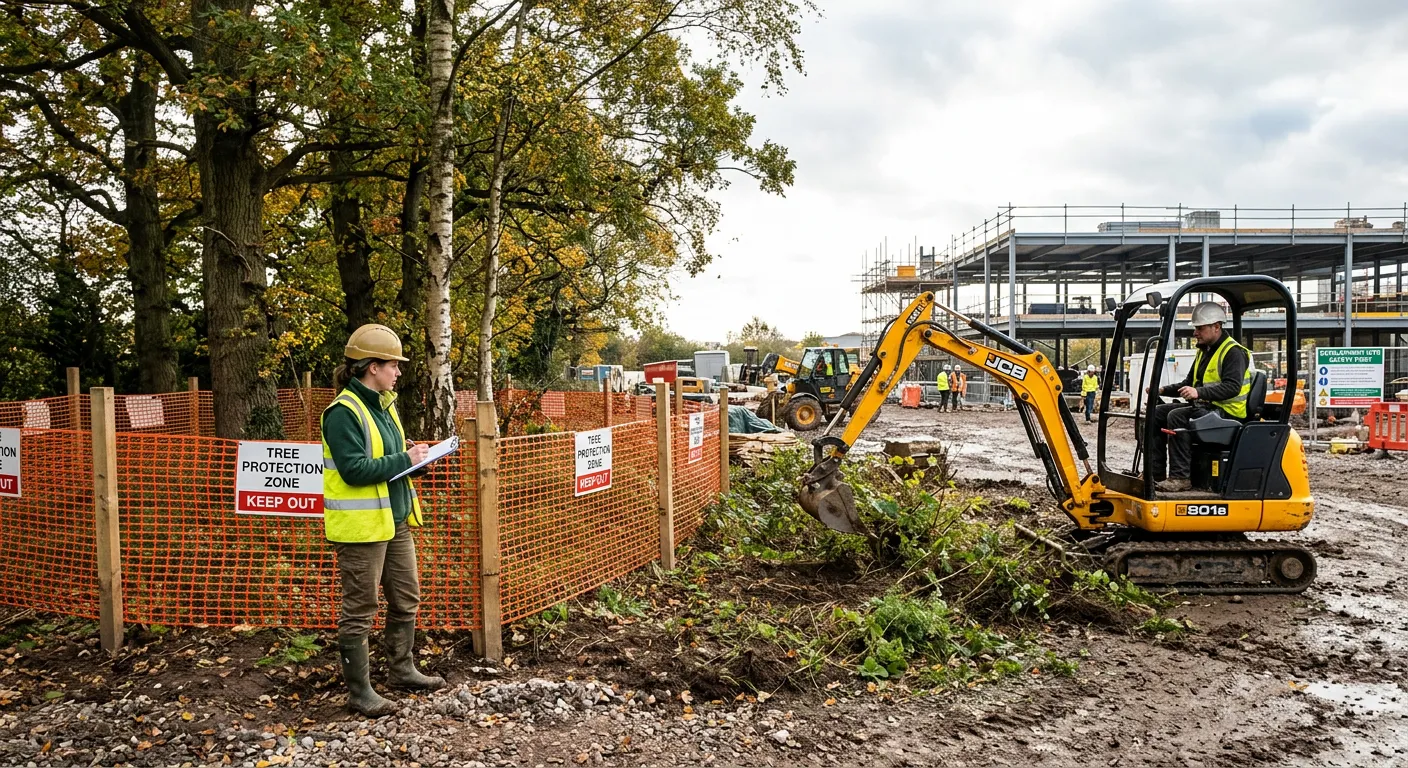
We provide clear briefings to all contractors/site teams on ecological features, legal obligations and best practice.
Watching Briefs / Supervision During Key Works
Vegetation clearance, demolition, earthworks, species translocation, habitat creation. We monitor compliance with method statements, stop works if necessary and advise in real-time.
Regular Record-Keeping & Reporting
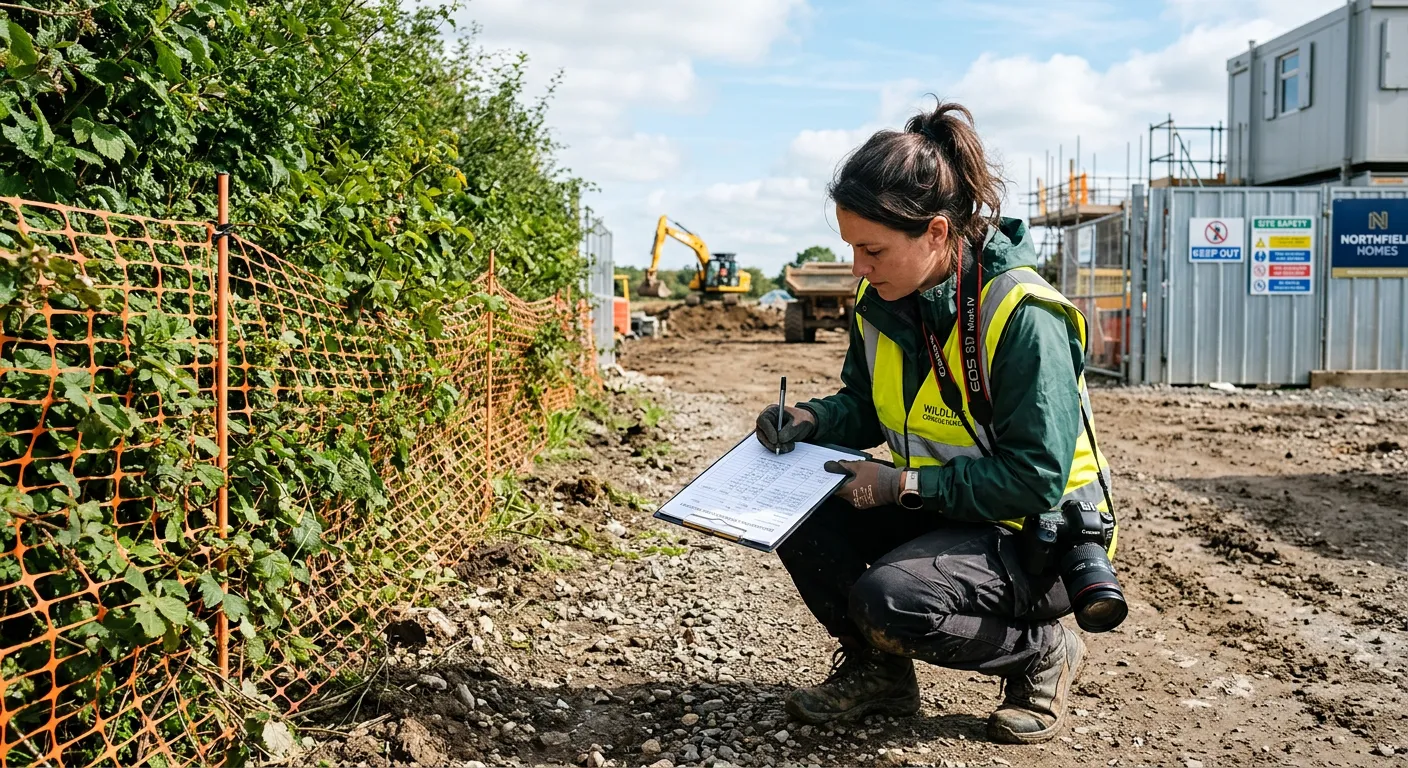
Detailed site logs, photographic records, progress reports, sign-off of ecological measures and assistance with condition discharge.
Liaison with Contractors, Project Managers and Regulators
Ensures that ecological measures are integrated into the construction programme and that unexpected ecological issues are addressed quickly.

Legislation, Policy & Standards We Adhere To
We deliver our ECoW role in line with relevant legal, regulatory and good practice frameworks, including:
- The Wildlife and Countryside Act 1981 (for protected species and habitats)
- Planning consent conditions (e.g., construction environmental management plan, ecological method statements) - many consents explicitly require supervision by an Ecological Clerk of Works.
- Best practice guidance from the Chartered Institute of Ecology & Environmental Management (CIEEM) for ecological supervision and compliance.
The Benefits to You
Minimised Risk
Minimises risk of ecological non-compliance or wildlife law breach, helping your project run more smoothly.
Schedule On Track
By having ecological supervision on-site you avoid unplanned stops or redesigns.
Enhanced Credibility
Enhances your credibility with regulators, planners and stakeholders, showing you proactively manage ecological risk.
Cost Efficiency
Early detection and resolution of ecological issues is often cheaper than reactive mitigation later.
Simplified Condition Discharge
The ECoW's records and reports support the evidence you'll need for discharge of ecological/planning conditions.